
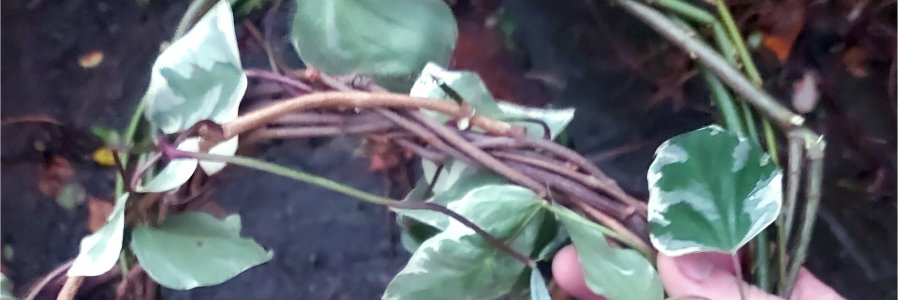
Much of the traditional activities of midwinter celebrations in the northern Hemisphere, follow traditional behaviours of gathering plants to bring indoors, as decoration or spiritual significance, rather than as foodstuffs. Two particular common examples are Christmas trees, and wreaths, applicable equally to Yuletide, Christmas, and other ceremonies around the winter solstice.
As the seasons darken and weather becomes colder and wetter, humankind instinctively withdraw to shelter, and gather around indoor fires to tell stories, for support, sharing foods and appreciate the joy of collected resources. When moving indoors, since ancient generations, we also brought foliage indoors with us, for decoration, fragrance, or utility, keeping a connection to outdoor life.
In the following sections, we'll talk you through the selection and construction of a basic hoop usable for many things, and how to make your own wreath. This is a wonderfully simple yet rewarding craft, as you collect items from the woodland, hedgerow, or garden, then gradually make a usable hoop, and build from there.
Basic Hoop Material
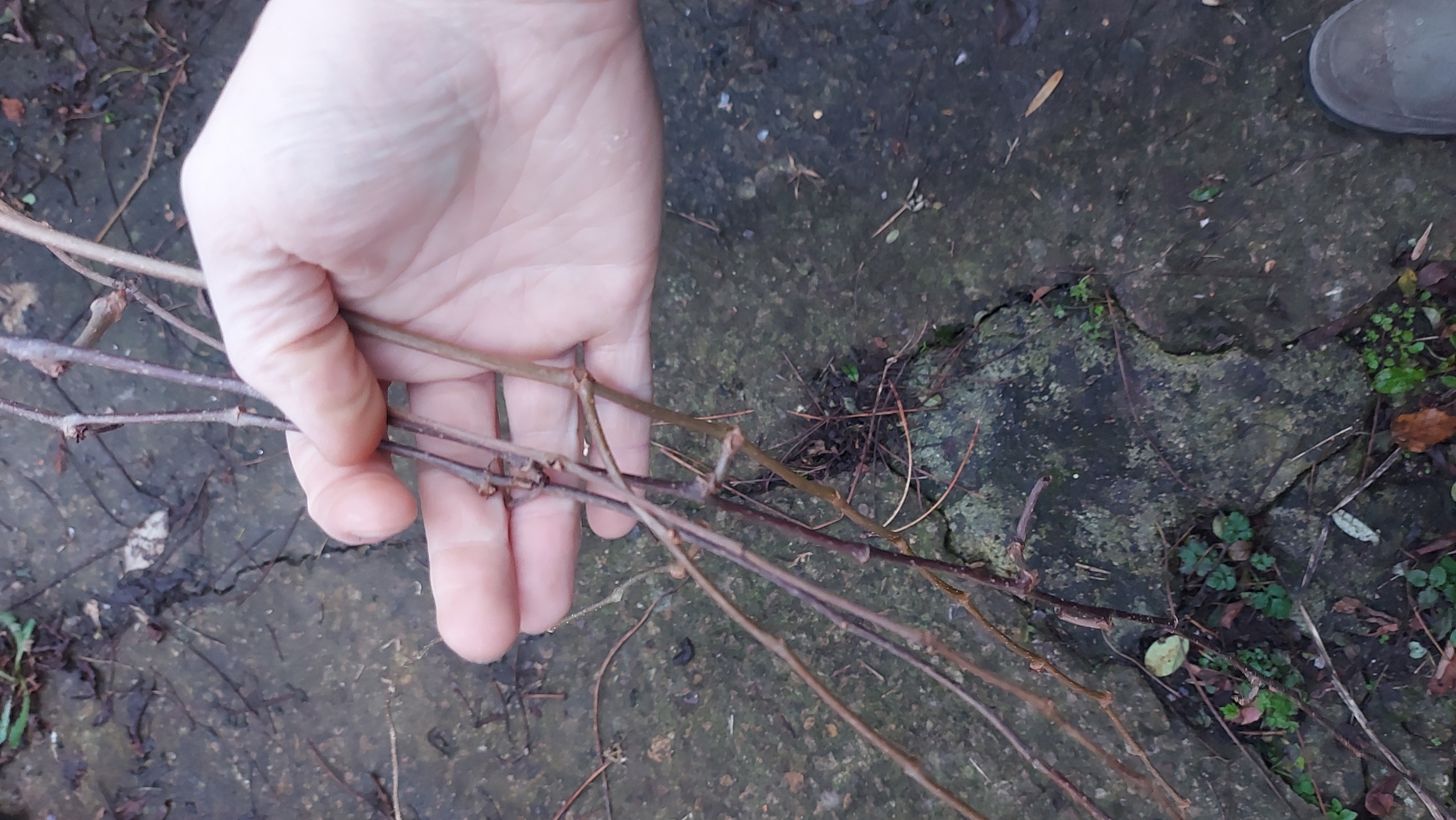
To form a hoop, you need pliable, long thin whips, of between 3mm and 8mm thickness, which are naturally springy, and can be twisted around each other without snapping. These are usually available from fast-growing climbing plants and young shoots from coppiced trees. Care and practice are required to create the hoop, as described below, but various items can be used.
- Willow - found near water; associated in lore with adaptability and new beginnings, but also sadness; regrows and sprouts easily.
- Hazel - grows very straight, and can be twisted along the stems (as with Willow); a tree of great wisdom.
- Elm - more tricky to work with, but still with flexible stems, the wood lasts well in damp conditions and the tree is a guardian to the underworld.
- Lime - pick a stem with a years' bark, and lime can also be formed into a hoop; the folklore of lime (or linden) is mostly about luck and love, possibly linked to the heart shaped leaves.
- Clematis - A native and wild climber in the UK and all over, identifiable around wintertime as its fluffy "old mans beard" seeds
- Virginia creeper (which we show here, as we've got lots of it at home!) - non-native, grows long and plentiful, HOWEVER, note that it is now controlled under the Wildlife and Countryside Act (1981) and should NOT be introduced to the wild, and can sometime trigger alergic reactions.
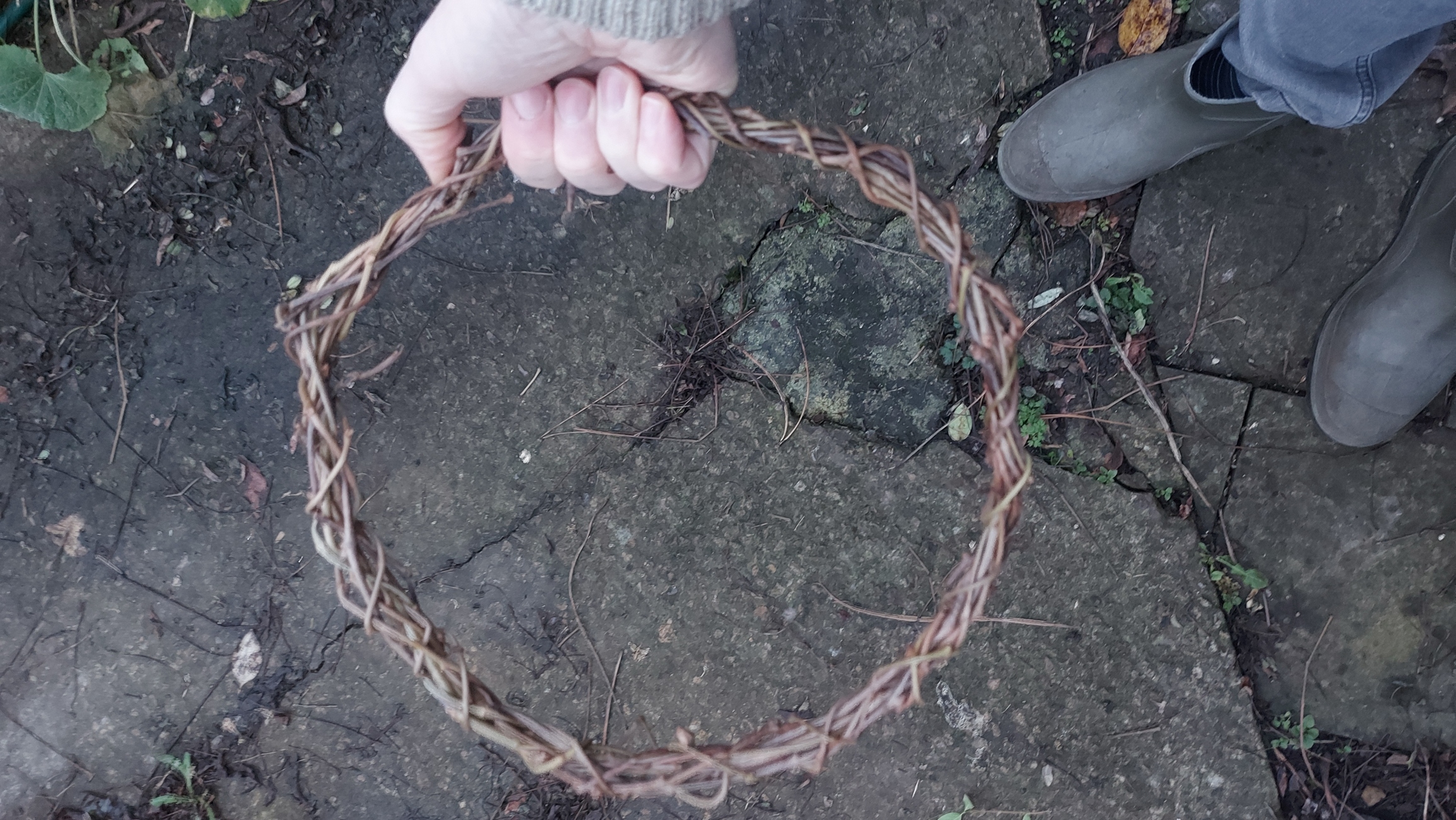
Choice of Decorative Foliage + Folklore
Traditionally evergreen, particularly in northern hemisphere wintertime, as most other leaves have fallen. Evergreens retains leaves, look fresh and give off a fragrent and cleansing smell.
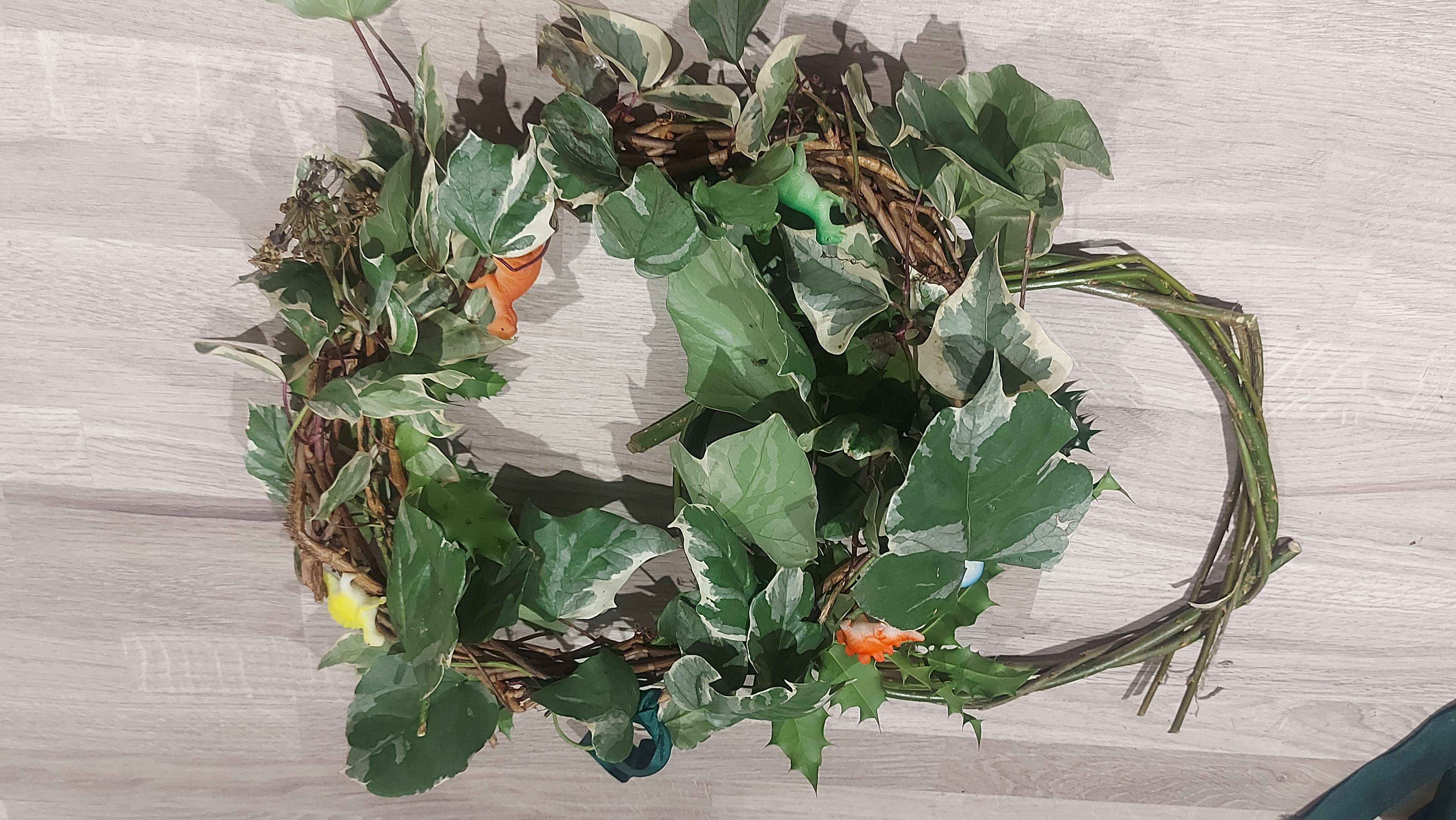
Your choice of decoration should be guided by what is locally available - gather as you take a walk, or note particular specimens to come back to. Be aware before handling that most everygreens have slightly acrid or potentially also toxic properties in their sap, so gloves are recommended, or select alternative plants.
- Holly - Protective and resilient, shining amongst dark weather and bare woodlands, the holly is king over winter.
- Ivy - Said to represent fidelity and endurance, many species of ivy exist with varying colouring of leaf and stem; some folklore links ivy with powers to purify.
- Laurel - Used as simple crowns by Roman emperors, symbolising victory and immortality, Laurel and relative Bay are not native, but have spread.
- Spruce - Traditionally used as indoor decorations during wintertime, the terpenes in the sap provide that cleansing, woody smell we find comforting.
Weave stems of any plant into your hoop, and consider the overall balance and form. There is no need to fully cover the underlying ring of a wreath, and you can add what you like... even dinosaurs! 🦖
How To Make a Basic Hoop
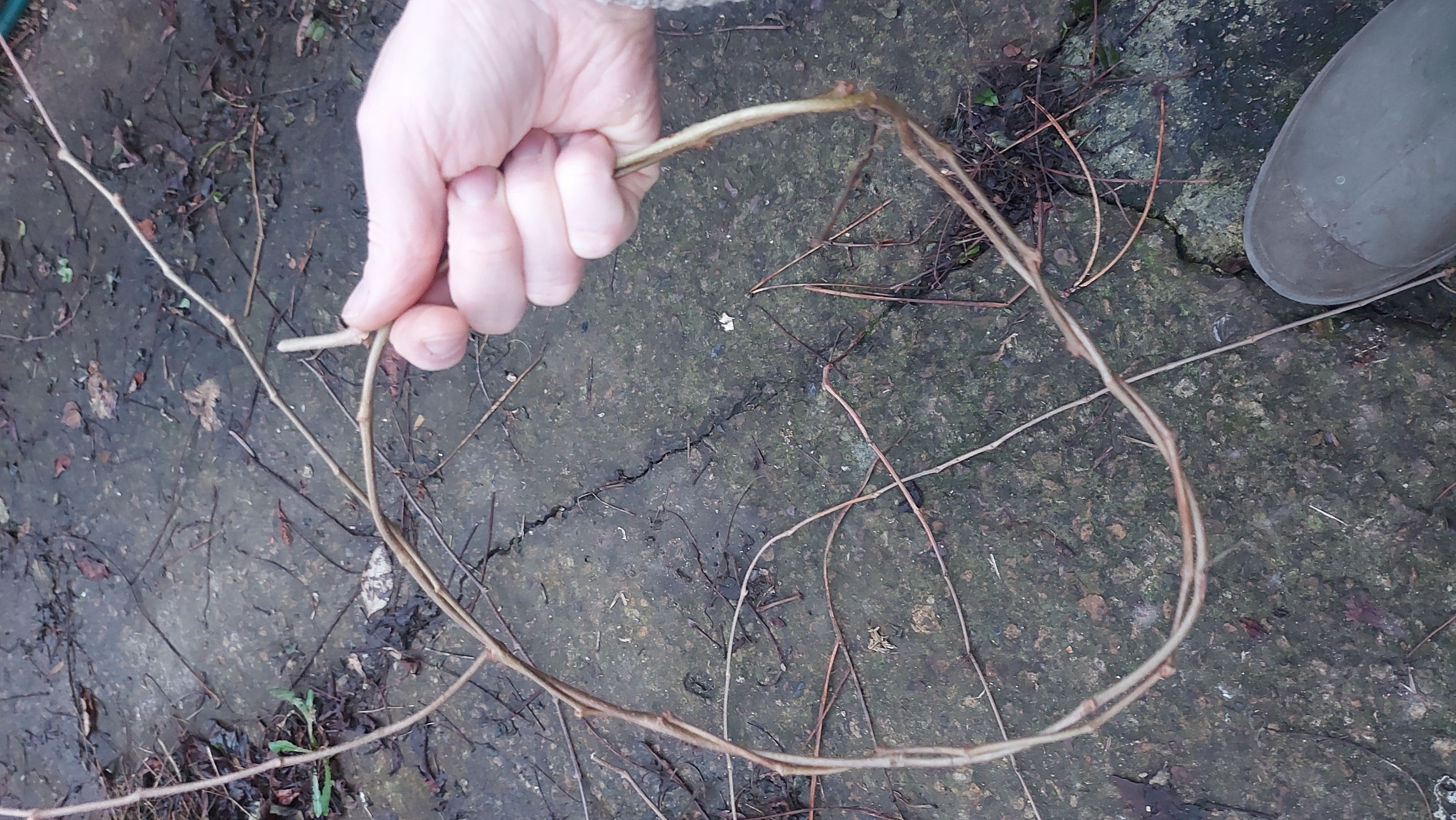
- Take a length of your chosen base stem, approx 1-2m
- Make an initial loop, holding it in one hand (which will keep holding it steady whilst you work, we hold in a right hand), and coax it around gently to create a diameter to suit you - use your body to steady the side of the hoop nearest you.
- Gently wind the other end of your stem through and around the hoop, towards an anticlockwise direction, approximately one twist every 3"
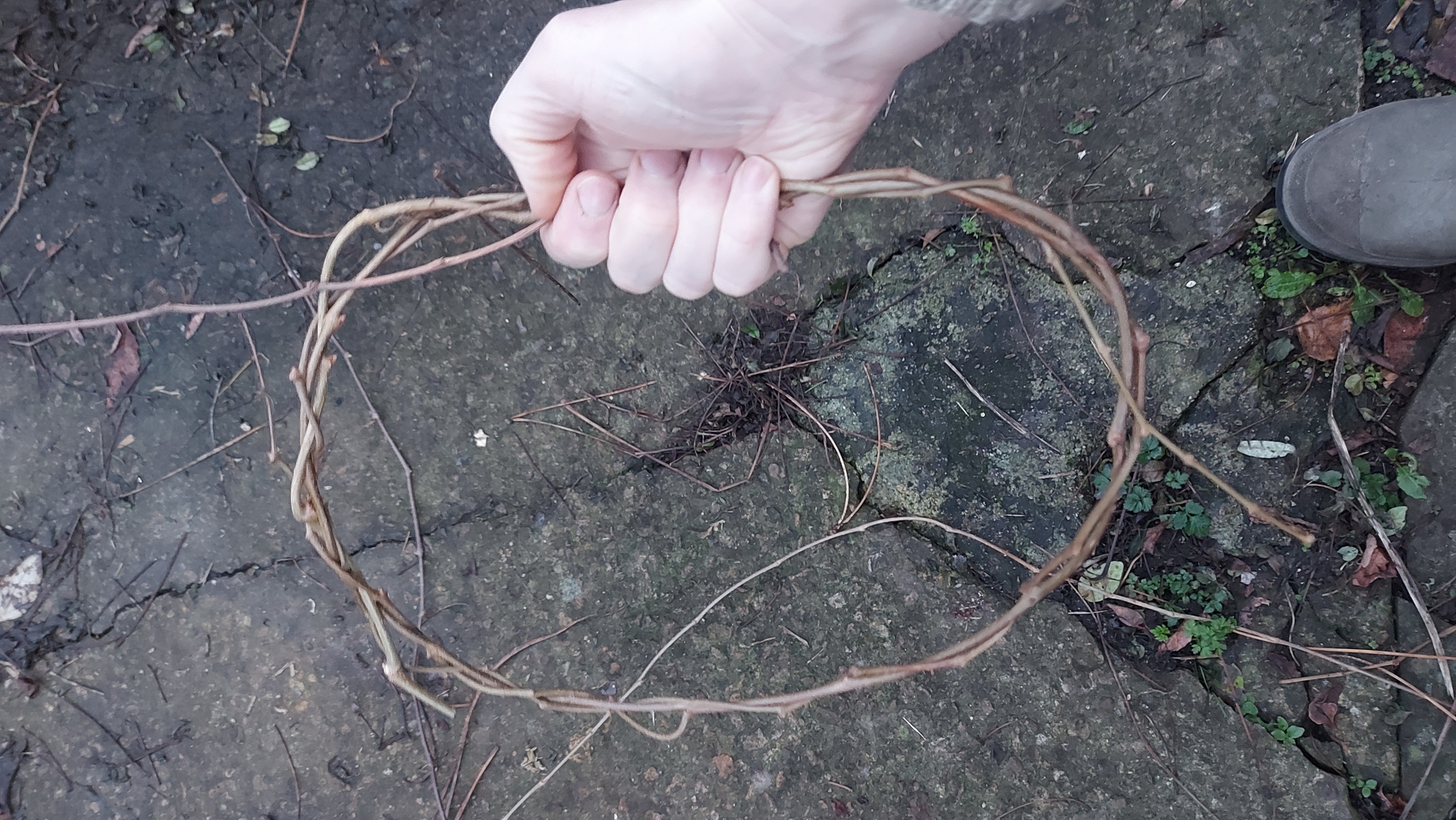
- When you reach the end of your stem, take another, and hold it in your fixed hand, lying towards the side of the hoop which has least material
- Gently feed the length of the stem through the basic hoop, and bring it back over around the outside of the hoop per step 3
- Continue feeding stems around and adding more stems in opposing positions, and even directions if you wish
Further Reading
- https://druidry.org/druid-way/teaching-and-practice/druid-tree-lore/english-ivy
- https://treesforlife.org.uk/into-the-forest/trees-plants-animals/trees/willow/willow-mythology-and-folklore/
- https://www.woodlandtrust.org.uk/trees-woods-and-wildlife/british-trees/a-z-of-british-trees/holly/
- https://www.legislation.gov.uk/ukpga/1981/69/schedule/9